 Back in the eighteenth century and before, when meat was roasted over an open kitchen fire, someone needed to turn it on a spit for even cooking. Sometimes boys did this hot, dangerous, and deeply unpleasant job. Sometimes cooks used dogs.
In grander kitchens of English, American, and many European houses, turnspit dogs were put on a treadmill, which was attached to a rotating wheel. When the dog turned the treadmill, the treadmill turned the spit. Can you see the dog in the wheel?
 “Long-bodied, crooked-legged” breeds were used, and in large households, they might work in teams, performing the task on different days. Although it’s hard to confirm this, several sources I read asserted that the term “every dog must have his day” comes from turnspit dogs taking turns at the wheel.
In the book Of Englishe Dogges published in 1576, there’s a section on “Curres of the mungrell and rascals sort,” where the author describes a certain dog called “Turnespete.”
“For who any meate is to bee roasted they go into a wheele which they turning rounde about with the waight of their bodies, so diligently looke to their businesse, that no drudge nor scullion can doe the feate more cunningly.” (34-5)
 Most people associate slavery in America with the southern states, but slavery very much existed in the North as well. In Manhattan in the early 1700s, the number of black slaves was nearly equal to that of free whites (Gilbert, 1).
 It’s a pretty amazing picture, isn’t it? (If you couldn’t tell, I’m in a major Velazquez admiration phase.) Velazquez got all sorts of props for it from the artists in Rome–he was even elected into the Academy of St. Luke.
 The figure on the far left certainly looks like Pareja did a self portrait, doesn’t it?
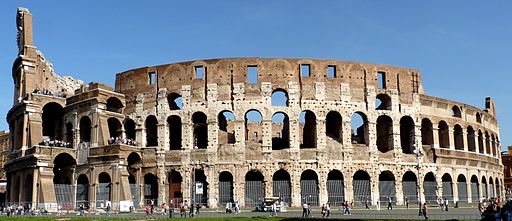 The ancient Romans were better at making concrete than we are today. According to a
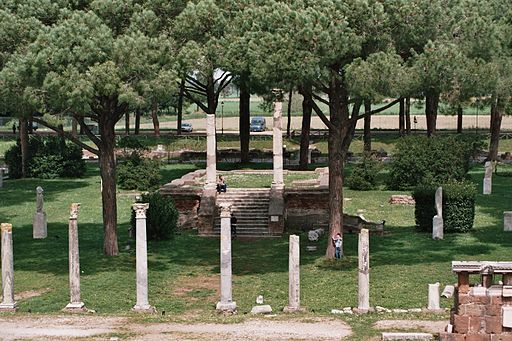 What’s fascinated researchers for so long is how the Roman concrete that was used to build harbors—submerged in sea water—managed to survive two thousand years, when Portland cement gives out after fifty. An analysis of the mineral components in Roman concrete dating to 37 BC reveals the recipe. According to the researchers’