 One of the more prestigious and cushy career paths of the ancient world would have to be the job of Vestal Virgin, in Ancient Rome.
A downside was that the job was probably a little dull. Your only duties were to be sure the holy flame of the goddess Vesta’s temple didn’t go out. Oh, and you weren’t allowed to have a boyfriend while you remained on the payroll. If you did, and were caught, you faced the deeply unpleasant prospect of being walled up with a day or so’s worth of food and water, a bed, and a lamp. (Your blood was sacred, and couldn’t be spilled, so entombment was the preferred mode of execution.)
But there were tremendous upsides. If you were lucky enough to be chosen (while still a very young girl, between about 3 and 10 years old), your parents would be thrilled. They’d have bragging rights modern-day Ivy League parents could only dream about. And you and five other vestals enjoyed privileges far exceeding those of any other women in ancient Rome. It was like winning the Golden Ticket. You lived in luxury at the public’s expense. You didn’t have to answer to your father. You could conduct business in your own name, and make your own will. You could ride through Rome in a wheeled carriage. Even the highest magistrates in the city had to make way for you. Should you happen to cross paths with a condemned criminal, his life would be spared. And seriously, in the scheme of things, considering some of the old toads your aristocratic parents might have signed you up for life with, purely out of business considerations, remaining free and unmarried must have seemed pretty appealing to a girl like you.
And you only had to serve for thirty years. After that, you were free to marry the person of your choosing, and it was considered extremely prestigious for a man to marry a former vestal, so you probably had your pick.
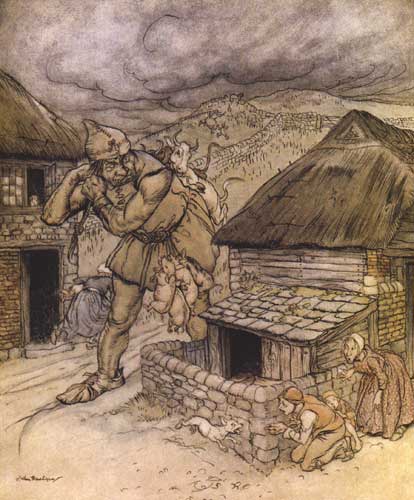 When I was a kid, I remember being traumatized by an especially violent version of Grimm’s Fairy Tales that we had on our shelf. Deep dark forests, child-eating wolves, ogres, giants, witches, and trolls (most of whom were also child-eating). As you may know, these stories weren’t initially geared toward kids, but came from an oral tradition of Central European folk tales passed along for generations, which the brothers Grimm compiled and first published in 1812.

 I saw a Saint Bernard in New York the other day, and it got me to wondering whether or not Saint Bernards really were used as rescue dogs, and whether or not they actually had barrels of brandy strapped around their necks to warm up avalanche victims. The answers, I discovered, are yes and no. They were rescue dogs, but they didn’t actually carry brandy around their necks.
 I subscribe to Samuel Pepys’ diary. Every evening I get an installment that corresponds to the same day and date that he wrote, 353 years ago. And every once in awhile he writes an entry that is really notable. Such as this one from last Saturday. Each of the three paragraphs from this date is enlightening:
 Lots of stuff going on here, but what most jumped out at me was his boss and benefactor, the Earl of Sandwich, who is feeling flush and wants to deck out his wife and child with black patches, a very popular fad during the seventeenth century. I